210.809 Profile im Ranking

Albert Schweitzer

Frankreich · Ärzte · Lebte 1875 bis 1965 · im Alter von 90

Albert Schweitzer wird in 84 Sprachen etwa 1.750 Mal am Tag gelesen.

Ein typischer Tag, 30 Tage bis 20. Oktober 2026

Der mittlere Tag der gezählten Tage, damit eine Nachrichtenwoche ihn nicht verschieben kann. Die Linie darunter zeigt die letzten 395 Tage, ein Punkt pro Tag.

Stimmt etwas nicht?
Vergleichen

Ludwig Philipp Albert Schweitzer (* 14. Januar 1875 in Kaysersberg bei Colmar, Reichsland Elsaß-Lothringen (Deutsches Reich); † 4. September 1965 in Lambarene, Gabun) war ein deutsch-französischer Arzt, Philosoph, evangelischer Theologe, Organist, Musikwissenschaftler und Pazifist.

Text aus Wikipedia, CC BY-SA 4.0

Stationen eines Lebens

1965Gestorben4. September 19651961“Any religion or philosophy which is not based on a respect for life is not a true religion or philosophy.”Eigene WorteLetter to a Japanese Animal Welfare Society (1961); also in The Words of Albert Schweitzer (1984) edited by ‎Norman Cousins, p. 37

1959Great Gold medal of the Société d'Encouragement au ProgrèsAuszeichnungJames Cook MedalAuszeichnungSonning PrizeAuszeichnung1956“Truth has no special time of its own. Its hour is now - always, and indeed then most truly when it seems most unsuitable to actual circumstances.”Eigene WorteCh. XI : Conclusion (1956 edition)

1955Honorary member of the Order of MeritAuszeichnung1954Pour le Mérite for Sciences and Arts orderAuszeichnung1952Paracelsus Medal of the German Medical AssociationAuszeichnungPrince Carl MedalAuszeichnung1951Johann-Peter-Hebel-PreisAuszeichnungPeace Prize of the German Publishers' and Booksellers' AssociationAuszeichnung1950Grand Officer of the Legion of HonourAuszeichnungOfficer of the Legion of HonourAuszeichnung1948Knight of the Legion of HonourAuszeichnung1932Goethe Plaque of the City of FrankfurtAuszeichnung1928Goethe Prize of the City of FrankfurtAuszeichnung1924“A word in conclusion about the relations between the whites and blacks. What must be the general character of the intercourse between them?”Eigene WorteCh. VII, Social Problems in the Forest, p. 130 (1924 translation by Ch. Th. Campion); Schweitzer later repudiated such statements, saying

1913“Modern Christianity must always reckon with the possibility of having to abandon the historical figure of Jesus.”Eigene WorteThe Quest of the Historical Jesus 2nd edition (1913), as translated by John Bowden et al. (2001)

1906“This dogma had first to be shattered before men could once more go out in quest of the historical Jesus, before they could even grasp the thought of His existence.”Eigene Wortep. 3

“The historical Jesus will be to our time a stranger and an enigma. The study of the Life of Jesus has had a curious history.”Eigene Wortep. 397

1875Geboren14. Januar 1875

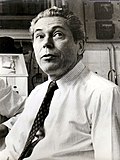
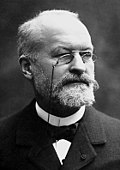
Fotos 8

In ihren eigenen Worten 10

,
Albert Schweitzer
,
10 Aussagen, neueste zuerst
  1. Any religion or philosophy which is not based on a respect for life is not a true religion or philosophy.

    1961, Letter to a Japanese Animal Welfare Society (1961); also in The Words of Albert Schweitzer (1984) edited by ‎Norman Cousins, p. 37, Eigene Worte

  2. The awareness that we are all human beings together has become lost in war and through politics.

    30. März 1958, Radio appeal for peace, Oslo, Norway (30 March 1958); also in Peace or Atomic War (1958) Three Appeals Broadcast from Oslo, Norway, on, Eigene Worte

  3. Truth has no special time of its own. Its hour is now - always, and indeed then most truly when it seems most unsuitable to actual circumstances.

    1956, Ch. XI : Conclusion (1956 edition), Eigene Worte

Wikiquote, CC BY-SA 4.0

Auszeichnungen

James Cook Medal1959
Great Gold medal of the Société d'Encouragement au Progrès1959
Sonning Prize1959
Honorary member of the Order of Merit1955
Pour le Mérite for Sciences and Arts order1954
Nobel Peace Prize1952
Paracelsus Medal of the German Medical Association1952
Prince Carl Medal1952
Peace Prize of the German Publishers' and Booksellers' Association1951
Johann-Peter-Hebel-Preis1951
Officer of the Legion of Honour1950
Grand Officer of the Legion of Honour1950
Knight of the Legion of Honour1948
Goethe Plaque of the City of Frankfurt1932
Goethe Prize of the City of Frankfurt1928
Honorary Citizen of Frankfurt Am Main
Pour le Mérite
Honorary Citizen of Pfaffenhoffen
Goethe Medal for Art and Science

Familie

Ist das die ganze Familie?

Gezeichnet werden nur Verwandte, die hier ein Profil haben. Eine Familie kann also größer sein als die Zeichnung. Eine Linie kann auch falsch sein.

Diese Familie korrigieren

Zur Person

Ludwig Philipp Albert Schweitzer (* 14. Januar 1875 in Kaysersberg bei Colmar, Reichsland Elsaß-Lothringen (Deutsches Reich); † 4. September 1965 in Lambarene, Gabun) war ein deutsch-französischer Arzt, Philosoph, evangelischer Theologe, Organist, Musikwissenschaftler und Pazifist. Er gilt als einer der bedeutendsten Denker des 20. Jahrhunderts. Schweitzer, genannt der „Urwalddoktor“, gründete eine Krankenstation in Lambarene im zentralafrikanischen Gabun. Er veröffentlichte theologische und philosophische Schriften, Arbeiten zur Musik, insbesondere zu Johann Sebastian Bach, sowie autobiographische Schriften in zahlreichen und vielbeachteten Werken. 1953 wurde ihm der Friedensnobelpreis für das Jahr 1952 zuerkannt, den er 1954 entgegennahm.

Text aus Wikipedia, CC BY-SA 4.0

Land
Frankreich
Kategorie
Ärzte
Art
Arzt
Status
verstorben
Daten
Lebte 1875 bis 1965 · im Alter von 90

Fame.am misst Signale öffentlicher Sichtbarkeit. Es misst nicht den Wert eines Menschen, Talent, Moral oder Glaubwürdigkeit.