Kein freies Foto
Eochaid
Historische Persönlichkeiten · Lebte 900 bis 889 · im Alter von -11
Eochaid wird in 37 Sprachen etwa 16 Mal am Tag gelesen.
Ein typischer Tag, 30 Tage bis 17. September 2026
Der mittlere Tag der gezählten Tage, damit eine Nachrichtenwoche ihn nicht verschieben kann. Die Linie darunter zeigt die letzten 60 Tage, ein Punkt pro Tag.
Stimmt etwas nicht?Eochaid (auch Eochu oder Eochaidh geschrieben) war schottischer König von 878 bis 889 und herrschte zusammen mit Giric. Er war der Neffe seines Vorgängers Aedh und Cousin seines Nachfolgers Donald II.
Text aus Wikipedia, CC BY-SA 4.0
Fotos 12

 Map of northern Britain, locations relating to the life and times of Eochaid.
 Photograph of the fortress of Al Clud occupied Al Clud ("the rock of the Clyde").[18] The mediaeval citadel that sat atop this geological formation formed the capital of the Kingdom of Al Clud until the late ninth century.
![An eighteenth century engraving of the southern bank of the River Clyde at Govan. The scene shows a now-nonexistent artificial hill that could have been the royal assembly site of the Kingdom of Strathclyde following the fall of Al Clud.[27][[#C3|Clarkson (2014)]] chs. 2 ¶ 50, 3 ¶ 13; [[#D14|Driscoll, ST (2003)]] p. 80; [[#D16|Driscoll, ST (2001c)]] [[#D10|Driscoll, ST (1998a)]] p. 101. The stepped sides of the hill are similar to those of some Scandinavian assembly sites in Britain and Ireland.[[#C3|Clarkson (2014)]] ch. 3 ¶ 13; [[#D13|Driscoll, S (2006)]]; [[#D16|Driscoll, ST (2001c)]]; [[#D10|Driscoll, ST (1998a)]] pp. 102-103."},"2":{"wt":"group=note"}},"i":0}}]}">[note 5]](https://thumb.wikimedia.org/wikipedia/commons/thumb/9/9f/A_view_of_the_banks_of_the_Clyde_taken_from_York_Hill.jpg/500px-A_view_of_the_banks_of_the_Clyde_taken_from_York_Hill.jpg?utm_source=en.wikipedia.org&utm_campaign=parser&utm_content=thumbnail) An eighteenth century engraving of the southern bank of the River Clyde at Govan. The scene shows a now-nonexistent artificial hill that could have been the royal assembly site of the Kingdom of Strathclyde following the fall of Al Clud.[27][[#C3|Clarkson (2014)]] chs. 2 ¶ 50, 3 ¶ 13; [[#D14|Driscoll, ST (2003)]] p. 80; [[#D16|Driscoll, ST (2001c)]] [[#D10|Driscoll, ST (1998a)]] p. 101. The stepped sides of the hill are similar to those of some Scandinavian assembly sites in Britain and Ireland.[[#C3|Clarkson (2014)]] ch. 3 ¶ 13; [[#D13|Driscoll, S (2006)]]; [[#D16|Driscoll, ST (2001c)]]; [[#D10|Driscoll, ST (1998a)]] pp. 102-103."},"2":{"wt":"group=note"}},"i":0}}]}">[note 5]
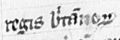
 The title of Áed mac Cináeda as it appears on folio 26r of Oxford Bodleian Library Rawlinson B 489 (the Annals of Ulster).[43] As far as the Irish annals are concerned, Áed was the last King of the Picts. Nevertheless, other sources report that Áed was succeeded by Eochaid and Giric.[44]
 Barochan Cross, a stone high cross,[51] dating between the eighth and tenth century.[52] This British monument is an example of the so-called 'Govan School' of sculpture.[53]
 The name of Giric as it appears on folio 30v of Lat. 4126: "Grig filius Dunegal".[73]
 Photograph of a mounted warrior, the most prominent figure displayed upon the Govan sarcophagus.[80] This monument is perhaps the finest example of the "Govan School" of sculpture. The sarcophagus could be that of Custantín mac Cináeda,[81] the Pictish king who orchestrated the death of Eochaid's paternal grandfather.
Familie
Eltern


Ist das die ganze Familie?
Gezeichnet werden nur Verwandte, die hier ein Profil haben. Eine Familie kann also größer sein als die Zeichnung. Eine Linie kann auch falsch sein.
Diese Familie korrigierenZur Person
Eochaid (auch Eochu oder Eochaidh geschrieben) war schottischer König von 878 bis 889 und herrschte zusammen mit Giric. Er war der Neffe seines Vorgängers Aedh und Cousin seines Nachfolgers Donald II. Eochaid war nicht berechtigt, gemäß dem Tanistry-System den schottischen Thron zu besteigen, weil er von der Tochter der königlichen Linie abstammte. Da er jedoch Ambitionen auf den Titel des Königs hatte, verbündete er sich mit Giric, um seinen Onkel Aedh gewaltsam von der Macht zu verdrängen. Als er dann jedoch selbst König war, musste er die Herrschaft über Schottland mit Giric teilen. Es darf angenommen werden, dass die beiden kein gutes Verhältnis zueinander hatten. Es wird angenommen, dass Eochaid die Dienste seines Cousins Donald in Anspruch nahm, um Giric loszuwerden. Doch Donald bestieg 889 selbst den Thron und zwang Eochaid, ins Exil zu gehen. Das Datum und der Ort von Eochaids Tod sind nicht bekannt. Trotz der wenigen vorhandenen Informationen gilt als gesichert, dass Eochaid der erste war, der der schottischen Kirche die Unabhängigkeit vom Staat gewährte. Die Kirche war zuvor den Gesetzen und Regelungen der Pikten unterworfen gewesen.
Text aus Wikipedia, CC BY-SA 4.0
Historische Persönlichkeiten, geboren in den 900er-Jahren 6


Fame.am misst Signale öffentlicher Sichtbarkeit. Es misst nicht den Wert eines Menschen, Talent, Moral oder Glaubwürdigkeit.