212.599 Profile im Ranking

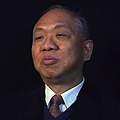
Howard Gardner

Vereinigte Staaten · Akademiker · Geboren 1943 · Alter 83

Howard Gardner wird in 47 Sprachen etwa 413 Mal am Tag gelesen.

Ein typischer Tag, 30 Tage bis 8. Oktober 2026

Der mittlere Tag der gezählten Tage, damit eine Nachrichtenwoche ihn nicht verschieben kann. Die Linie darunter zeigt die letzten 76 Tage, ein Punkt pro Tag.

Stimmt etwas nicht?

Howard Earl Gardner (* 11. Juli 1943 in Scranton, Pennsylvania) ist ein US-amerikanischer Erziehungswissenschaftler. Er ist Professor für Kognition und Pädagogik an der Harvard Graduate School of Education und außerordentlicher Professor für Psychologie an der Harvard University.

Text aus Wikipedia, CC BY-SA 4.0

Stationen eines Lebens

2015“Anything that is worth teaching can be presented in many different ways. These multiple ways can make use of our multiple intelligences.”Eigene WorteHoward Gardner, cited in: Laurie Myers, ‎Joseph Will (2015), Whole Family Learning: Experiences Living and Teaching In China. p. 16

2014“Stories are the single most powerful weapon in a leader's arsenal.”Eigene WorteHoward Gardner, cited in: Richard L. Daft (2014), The Leadership Experience, p. 273

2011“Both science and history are moving targets.”Eigene WorteHoward Gardner (2011), Truth, Beauty, and Goodness Reframed: Educating for the Virtues in the Age of Truthiness and Twitter, p. 26-27

Princess of Asturias Award for Social SciencesAuszeichnung2007“If you are not prepared to resign or be fired for what you believe in, then you are not a worker, let alone a professional. You are a slave.”Eigene WorteMärz 2007Howard Gardner, "The Ethical Mind," in: Harvard Business Review, March 2007.

2000Guggenheim FellowshipAuszeichnung1998“I myself do not condone investigations of racial differences in intelligence, because I think that the results of these studies are likely to be incendiary.”Eigene WorteJuli 1998The Ethical Responsibilities of Professionals, July 1998 (Updated February 2001). Good Work Project Report Series, Number 2.

1990Grawemeyer AwardsAuszeichnung1983“I want my children to understand the world, but not just because the world is fascinating and the human mind is curious.”Eigene WorteHoward Gardner (1983), "Multiple approaches to understanding," in: Charles M. Reigeluth (ed.) Instructional-design Theories and Models: A

1981MacArthur Fellows ProgramAuszeichnung1943Geboren11. Juli 1943

Fotos 8

In ihren eigenen Worten 9

,
Howard Gardner
,
9 Aussagen, neueste zuerst
  1. Anything that is worth teaching can be presented in many different ways. These multiple ways can make use of our multiple intelligences.

    2015, Howard Gardner, cited in: Laurie Myers, ‎Joseph Will (2015), Whole Family Learning: Experiences Living and Teaching In China. p. 16, Eigene Worte

  2. Stories are the single most powerful weapon in a leader's arsenal.

    2014, Howard Gardner, cited in: Richard L. Daft (2014), The Leadership Experience, p. 273, Eigene Worte

  3. Both science and history are moving targets.

    2011, Howard Gardner (2011), Truth, Beauty, and Goodness Reframed: Educating for the Virtues in the Age of Truthiness and Twitter, p. 26-27, Eigene Worte

Wikiquote, CC BY-SA 4.0

Auszeichnungen

Princess of Asturias Award for Social Sciences2011
Guggenheim Fellowship2000
Grawemeyer Awards1990
MacArthur Fellows Program1981

Im Umfeld

Ehepartner: Ellen Winner

Zur Person

Howard Earl Gardner (* 11. Juli 1943 in Scranton, Pennsylvania) ist ein US-amerikanischer Erziehungswissenschaftler. Er ist Professor für Kognition und Pädagogik an der Harvard Graduate School of Education und außerordentlicher Professor für Psychologie an der Harvard University. Er ist als Autor populärwissenschaftlicher Bücher erfolgreich, zudem beschäftigt er sich mit Fragen der Neuroethik. Er entwickelte eine alternative Theorie zur Intelligenz, die Theorie der multiplen Intelligenzen.

Text aus Wikipedia, CC BY-SA 4.0

Land
Vereinigte Staaten
Kategorie
Akademiker
Art
Akademiker
Status
lebend
Daten
Geboren 1943 · Alter 83

Fame.am misst Signale öffentlicher Sichtbarkeit. Es misst nicht den Wert eines Menschen, Talent, Moral oder Glaubwürdigkeit.