Hu Shi
China · Akademiker · Lebte 1891 bis 1962 · im Alter von 70
Hu Shi wird in 36 Sprachen etwa 738 Mal am Tag gelesen.
Ein typischer Tag, 30 Tage bis 22. Oktober 2026
Der mittlere Tag der gezählten Tage, damit eine Nachrichtenwoche ihn nicht verschieben kann. Die Linie darunter zeigt die letzten 397 Tage, ein Punkt pro Tag.
Stimmt etwas nicht?Hu Shi (chinesisch 胡適 / 胡适, Pinyin Hú Shì, * 17. Dezember 1891 in Shanghai; † 24. Februar 1962 in Taiwan) war ein chinesischer Philosoph, Philologe und Politiker. Er war einer der geistigen Führer der Bewegung des 4. Mai, die Chinas Weg in die Moderne wesentlich mitbestimmte.
Text aus Wikipedia, CC BY-SA 4.0
Stationen eines Lebens
Fotos 5

 Hu reviews U.S. Army, Navy and Marine Corps units during a China Day celebration at the 1939 New York World's Fair, October 10, 1939
 Hu Shih Hall at Cornell University
 Hu Shih as pictured in The Most Recent Biographies of Chinese Dignitaries
 Hu Shih (left) and Chiang Kai-shek at Academia Sinica, Taipei, April 1958
Auszeichnungen
Familie


Ist das die ganze Familie?
Gezeichnet werden nur Verwandte, die hier ein Profil haben. Eine Familie kann also größer sein als die Zeichnung. Eine Linie kann auch falsch sein.
Diese Familie korrigierenZur Person
Hu Shi (chinesisch 胡適 / 胡适, Pinyin Hú Shì, * 17. Dezember 1891 in Shanghai; † 24. Februar 1962 in Taiwan) war ein chinesischer Philosoph, Philologe und Politiker. Er war einer der geistigen Führer der Bewegung des 4. Mai, die Chinas Weg in die Moderne wesentlich mitbestimmte. Vor allem seine Rolle in der Bewegung für eine Neue Kultur und sein Beitrag zur literarischen Revolution sind in diesem Zusammenhang von Bedeutung. Hu gilt als einer der wichtigsten Vertreter des frühen chinesischen Liberalismus. Seine Ansichten brachten ihn im Verlauf der krisengeschüttelten 1920er und 1930er Jahre nicht nur in Konflikt mit den Autoritäten, sondern zunehmend auch mit dem Marxismus. Während des Zweiten Japanisch-Chinesischen Krieges wirkte Hu als Botschafter der Republik China in den USA und nach dem Chinesischen Bürgerkrieg bei den Vereinten Nationen.
Text aus Wikipedia, CC BY-SA 4.0
Gemeinsamkeiten mit Hu
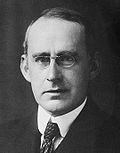 Arthur EddingtonBeide ausgezeichnet mit Messenger Lectures
 Bronisław MalinowskiBeide ausgezeichnet mit Messenger Lectures
 Martha NussbaumBeide ausgezeichnet mit Honorary Doctor of the Bucknell University
 Deirdre McCloskeyBeide ausgezeichnet mit Honorary Doctor of the Denison University
 Reinhard ZimmermannBeide ausgezeichnet mit Honorary Doctor of the University of California, Berkeley
Akademiker aus China 1

Fame.am misst Signale öffentlicher Sichtbarkeit. Es misst nicht den Wert eines Menschen, Talent, Moral oder Glaubwürdigkeit.