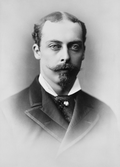
212.599 Profile im Ranking

Victoria

Vereinigtes Königreich · Historische Persönlichkeiten · Lebte 1819 bis 1901 · im Alter von 81

Victoria wird in 153 Sprachen etwa 19.140 Mal am Tag gelesen.

Ein typischer Tag, 30 Tage bis 23. Oktober 2026

Der mittlere Tag der gezählten Tage, damit eine Nachrichtenwoche ihn nicht verschieben kann. Die Linie darunter zeigt die letzten 398 Tage, ein Punkt pro Tag.

Stimmt etwas nicht?
Vergleichen

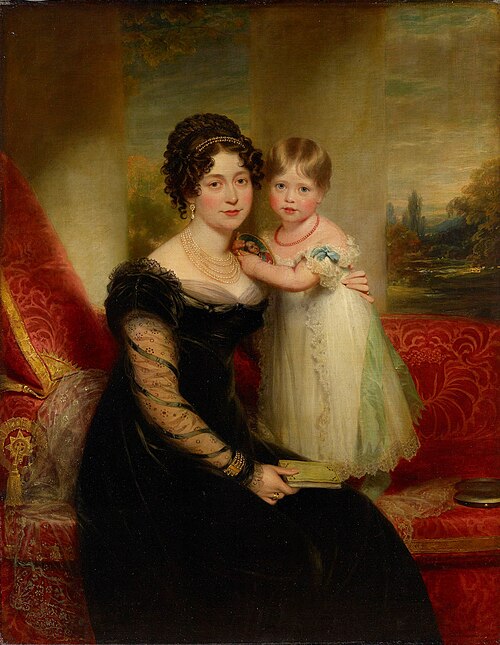
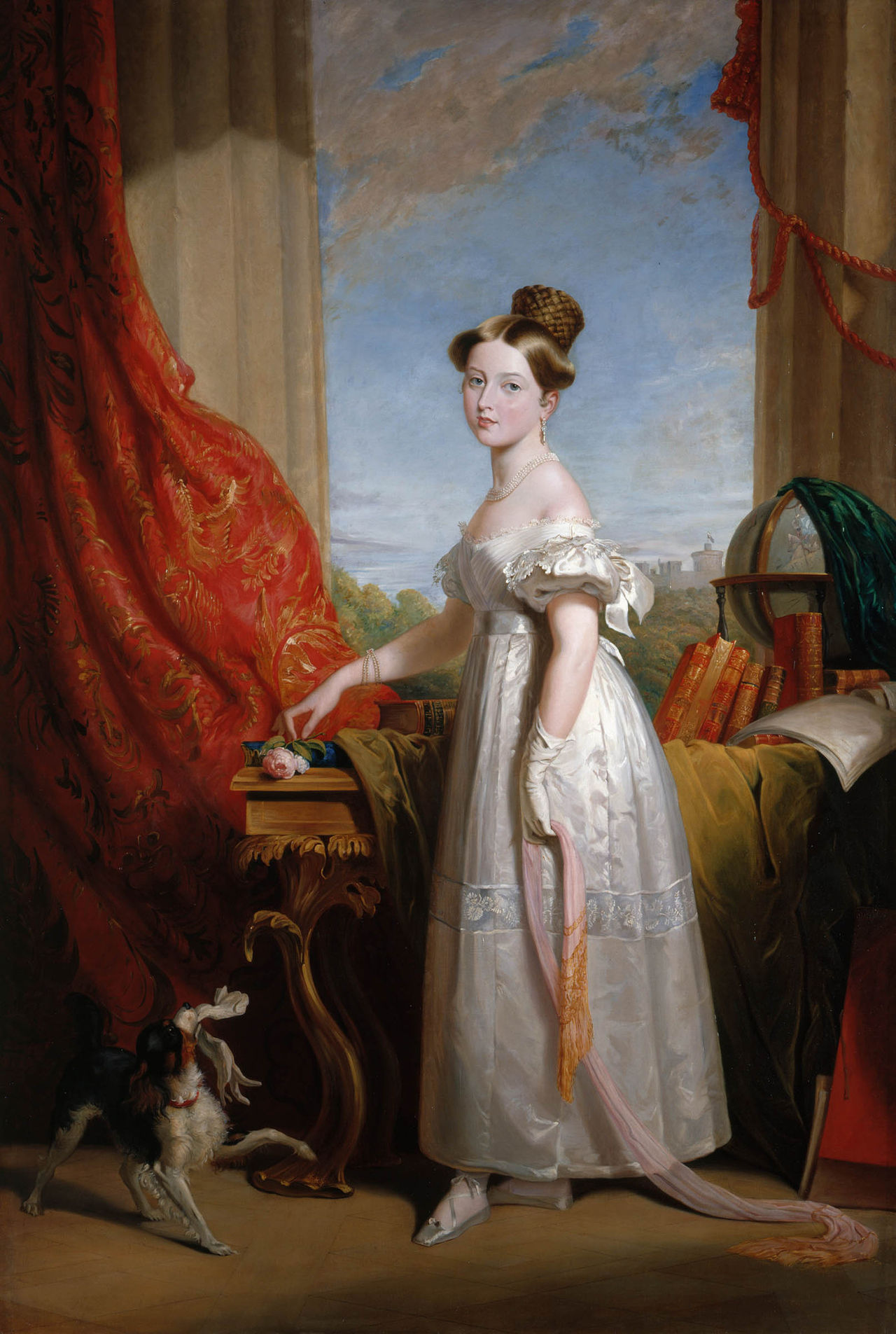
Victoria (deutsch Viktoria; * 24. Mai 1819 als Princess Alexandrina Victoria of Kent im Kensington Palace, London; † 22. Januar 1901 in Osborne House, Isle of Wight) war von 1837 bis 1901 Königin des Vereinigten Königreichs Großbritannien und Irland.

Text aus Wikipedia, CC BY-SA 4.0

Stationen eines Lebens

1936Mädchenjahre einer KöniginFilmbiografie über ihr Leben, Film von Erich Engel (1936)IMDb1913Sixty Years a QueenFilmbiografie über ihr LebenNovember 1913, Film von Bert Haldane (1913)IMDb1912Monument à la reine VictoriaEhrung12. April 1912, Denkmal in FrankreichStatue of Queen VictoriaEhrung, Statue von Albert Bruce-Joy19121907Statue of Queen VictoriaEhrung, Bauwerk im Vereinigten Königreich1906Victoria MonumentEhrung27. September 1906, Skulptur von C. J. Allen1905Victoria Memorial FountainEhrung, Zierbrunnen in Malakka, Malaysia1902Victoria MedalNach ihr benannt, Medaille der Royal Geographical Society1901Gestorben22. Januar 19011899“We are not interested in the possibilities of defeat; they do not exist.”Eigene WorteDezember 1899December 1899 letter to Arthur Balfour during the "Black Week" of the Boer War, as quoted in The Columbia Dictionary of Quotations (1993),

“I am too horrified for words at this monstrous horrible sentence against this poor martyr Dreyfus. If only all Europe would express its horror and indignation!”Eigene Worte9. September 1899Letter to Lord Salisbury on the Dreyfus affair (9 September 1899), quoted in The Letters of Queen Victoria: A Selection from Her Majesty's

“I sympathise most deeply with your expressions on the horrors of war, than which no one can feel more strongly than I do; and earnestly hope that it may be averted.”Eigene WorteSeptember 1899Letter to the Queen of the Netherlands shortly before the Second Boer War (September 1899), quoted in The Letters of Queen Victoria: A

1887Albert MedalAuszeichnung1882“It is worth being shot at to see how much one is loved.”Eigene Worte2. März 1882After being shot at by Roderick Maclean on 2 March 1882, as quoted in Stanley Weintraub, Victoria. Biography of a queen (1987), p. 450.

1876Ernannt: Emperor of IndiaAmt1. Mai 1876 bis 22. Januar 19011867Ernannt: Monarch of CanadaAmt1. Juli 1867 bis 22. Januar 19011860“All marriage is such a lottery -- the happiness is always an exchange -- though it may be a very happy one -- still the poor woman is bodily and morally the husband's slave.”Eigene Worte16. Mai 1860Letter (16 May 1860), published in Dearest Child: Letters Between Queen Victoria and the Princess Royal Previously Unpublished edited by

1841“Affairs go on, and all will take some shape or other, but it keeps one in hot water all the time.”Eigene Worte15. Juni 1841Letter to King of the Belgians, Nuneham, 15th June, 1841 (Note: Nuneham was the house of Edward Vernon Harcourt, Archbishop of York).

1837Ernannt: Monarch of the United Kingdom of Great Britain and IrelandAmt20. Juni 1837 bis 22. Januar 1901Knight of the GarterAuszeichnung1819Geboren24. Mai 1819

Fotos 12

In ihren eigenen Worten 7

,
Victoria
,
7 Aussagen, neueste zuerst
  1. We are not interested in the possibilities of defeat; they do not exist.

    Dez. 1899, December 1899 letter to Arthur Balfour during the "Black Week" of the Boer War, as quoted in The Columbia Dictionary of Quotations (1993),, Eigene Worte

  2. I am too horrified for words at this monstrous horrible sentence against this poor martyr Dreyfus. If only all Europe would express its horror and indignation!

    9. Sept. 1899, Letter to Lord Salisbury on the Dreyfus affair (9 September 1899), quoted in The Letters of Queen Victoria: A Selection from Her Majesty's, Eigene Worte

  3. I sympathise most deeply with your expressions on the horrors of war, than which no one can feel more strongly than I do; and earnestly hope that it may be averted.

    Sept. 1899, Letter to the Queen of the Netherlands shortly before the Second Boer War (September 1899), quoted in The Letters of Queen Victoria: A, Eigene Worte

Wikiquote, CC BY-SA 4.0

Auszeichnungen

Albert Medal1887
Knight of the Garter1837
Order of the Thistle
Order of St Patrick
Order of the Star of India
Order of the Indian Empire
Order of Merit
Order of Saint John
Order of Solomon
Order of Prince Danilo I
Order of the Black Eagle
Order of Queen Maria Luisa
Order of Saint Catherine
Order of the Bath
Order of Saint Michael and Saint George
Royal Victorian Order
Distinguished Service Order
Order of the Crown of India
Royal Order of Victoria and Albert
Decoration of the Royal Red Cross
Grand Cross of the Legion of Honour
Order of Louise
Order of Charles III
Order of Christ
Order of the Immaculate Conception of Vila Viçosa
Order of Saint Isabel
Order of Pedro I
Order of the White Eagle
Order of the Cross of Takovo
Order of St. Sava
Order of the Royal House of Chakri
Order of the White Elephant
Royal Order of Kamehameha I
Royal Family Order of King George IV
Order of Aftab
orders, decorations, and medals of the United Kingdom
Legion of Honour

Familie

Ist das die ganze Familie?

Gezeichnet werden nur Verwandte, die hier ein Profil haben. Eine Familie kann also größer sein als die Zeichnung. Eine Linie kann auch falsch sein.

Diese Familie korrigieren

Zur Person

Victoria (deutsch Viktoria; * 24. Mai 1819 als Princess Alexandrina Victoria of Kent im Kensington Palace, London; † 22. Januar 1901 in Osborne House, Isle of Wight) war von 1837 bis 1901 Königin des Vereinigten Königreichs Großbritannien und Irland. Seit Mai 1876 trug sie als erste britische Monarchin zusätzlich den Titel Kaiserin von Indien (Empress of India). Sie war die Nichte ihres Vorgängers William IV., genauer die Tochter dessen jüngeren Bruders Edward, Duke of Kent and Strathearn und der Prinzessin Victoire von Sachsen-Coburg-Saalfeld. Mit der Thronbesteigung Victorias im Juni 1837 endete aufgrund des im Königreich Hannover geltenden Salischen Gesetzes, das Frauen von der Thronfolge ausschloss, die seit 1714 bestehende Personalunion zwischen Großbritannien und Hannover. Während des Viktorianischen Zeitalters, der 63-jährigen Regierungszeit der Königin, erreichte das Britische Empire den Zenit seiner politischen und ökonomischen Macht, die Ober- und Mittelschichten erlebten eine beispiellose wirtschaftliche Blütezeit. Prägend für ihre Regentschaft waren der Einfluss ihres Ehemannes Albert von Sachsen-Coburg und Gotha sowie ihr nahezu vollständiger Rückzug aus der Öffentlichkeit nach dessen Tod 1861. Insgesamt interpretierte Victoria ihre Rolle als konstitutionelle Monarchin sehr eigenwillig und durchaus selbstbewusst. Ihre 63-jährige Herrschaft war die bis dahin längste aller britischen Monarchen, ehe sie 2015 von Königin Elisabeth II. übertroffen wurde. Aufgrund ihrer zahlreichen Nachkommen erhielt sie den Beinamen „Großmutter Europas“; sie ist beispielsweise sowohl Ururgroßmutter von Königin Elisabeth II. als auch von deren Ehemann Philip, Duke of Edinburgh. Der Tod Victorias beendete die Herrschaft des Hauses Hannover. Mit ihrem ältesten Sohn Eduard VII. ging die Krone an das Haus Sachsen-Coburg und Gotha, dessen im Vereinigten Königreich regierender Zweig 1917 in Haus Windsor umbenannt wurde.

Text aus Wikipedia, CC BY-SA 4.0

Land
Vereinigtes Königreich
Kategorie
Historische Persönlichkeiten
Art
Historische Persönlichkeit
Status
verstorben
Daten
Lebte 1819 bis 1901 · im Alter von 81

Fame.am misst Signale öffentlicher Sichtbarkeit. Es misst nicht den Wert eines Menschen, Talent, Moral oder Glaubwürdigkeit.