Rabindranath Tagore
Indien · Schriftsteller · Lebte 1861 bis 1941 · im Alter von 80
Rabindranath Tagore wird in 168 Sprachen etwa 3.004 Mal am Tag gelesen.
Ein typischer Tag, 30 Tage bis 23. Oktober 2026
Der mittlere Tag der gezählten Tage, damit eine Nachrichtenwoche ihn nicht verschieben kann. Die Linie darunter zeigt die letzten 398 Tage, ein Punkt pro Tag.
Stimmt etwas nicht?Rabindranath Tagore bzw. Rabindranath Thakur (bengalisch রবীন্দ্রনাথ ঠাকুর Rabīndranāth Ṭhākur, [ɾobin̪d̪ɾonat̪ʰ ʈʰakuɾ] ; * 7. Mai 1861 in Kalkutta; † 7. August 1941 ebenda) war ein bengalischer Philosoph, Dichter, Maler, Komponist, Musiker und Brahmo-Samaj-Anhänger in Indien.
Text aus Wikipedia, CC BY-SA 4.0
Stationen eines Lebens
Fotos 8
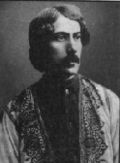
 Rabindranath Tagore in 1909
 "Rabindra Nath Tagore meets Sudhindra Bose at the State University of Iowa, Iowa City" photo, from- Sudhindra Bose - Fifteen Years in America (page 320 crop)

 An exhibition of books, music and portfolios on Tagore jointly organised by Sahitya Akademi, Lalit Kala Akademi and Sangeet Natak Akademi, in New Delhi on May 07, 2011
 Az élet megismerése Rabindranáth Tagore
 Balmeeki, portrayed by Ranbindranath Tagore himself
 Bengali Akarmatrik Swaralipi
 Boat used by Rabindranath Tagore at the pond of Shelaidaha Kuthibari , Kushtia
In ihren eigenen Worten 10
 ,
The truth comes as conqueror only because we have lost the art of receiving it as guest.
The idea of the Nation is one of the most powerful anaesthetics that Man has invented.
In the heart of Europe runs the purest stream of human love, of justice, of spirit of self-sacrifice for higher ideals.
Auszeichnungen
Familie
 Rabindranath Tagore
Partner


Geschwister




Ist das die ganze Familie?
Gezeichnet werden nur Verwandte, die hier ein Profil haben. Eine Familie kann also größer sein als die Zeichnung. Eine Linie kann auch falsch sein.
Diese Familie korrigierenZur Person
Rabindranath Tagore bzw. Rabindranath Thakur (bengalisch রবীন্দ্রনাথ ঠাকুর Rabīndranāth Ṭhākur, [ɾobin̪d̪ɾonat̪ʰ ʈʰakuɾ] ; * 7. Mai 1861 in Kalkutta; † 7. August 1941 ebenda) war ein bengalischer Philosoph, Dichter, Maler, Komponist, Musiker und Brahmo-Samaj-Anhänger in Indien. Tagore erhielt 1913 den Nobelpreis für Literatur und war damit der erste asiatische Nobelpreisträger. Tagore revolutionierte in einer als „Bengalische Renaissance“ bekannten Zeit die bengalische Literatur mit Werken wie Ghare baire (deutsch Das Heim und die Welt) oder Gitanjali und erweiterte die bengalische Kunst mit einer Unzahl von Gedichten, Kurzgeschichten, Briefen, Essays und Bildern. Er war ein engagierter Kultur- und Sozialreformer sowie Universalgelehrter. Die Kunst seiner Heimat modernisierte er, indem er ihre strikte Struktur und klassische Formensprache gezielt angriff. Zwei seiner Lieder sind heute die Nationalhymnen von Bangladesch und Indien: Amar Shonar Bangla und Jana Gana Mana. Tagore wurde als Gurudeb bezeichnet, ein Ehrentitel, der sich auf Guru und Deva bezieht.
Text aus Wikipedia, CC BY-SA 4.0



Fame.am misst Signale öffentlicher Sichtbarkeit. Es misst nicht den Wert eines Menschen, Talent, Moral oder Glaubwürdigkeit.