212.599 Profile im Ranking

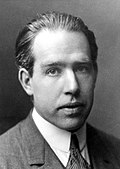
Max Planck

Deutschland · Wissenschaftler · Lebte 1858 bis 1947 · im Alter von 89

Max Planck wird in 149 Sprachen etwa 2.159 Mal am Tag gelesen.

Ein typischer Tag, 30 Tage bis 23. Oktober 2026

Der mittlere Tag der gezählten Tage, damit eine Nachrichtenwoche ihn nicht verschieben kann. Die Linie darunter zeigt die letzten 398 Tage, ein Punkt pro Tag.

Stimmt etwas nicht?
Vergleichen

Max Karl Ernst Ludwig Planck (* 23. April 1858 in Kiel, Herzogtum Holstein; † 4. Oktober 1947 in Göttingen, Niedersachsen) war ein deutscher Physiker auf dem Gebiet der theoretischen Physik. Er gilt als Begründer der Quantenphysik.

Text aus Wikipedia, CC BY-SA 4.0

Stationen eines Lebens

1947Gestorben4. Oktober 19471945Goethe Prize of the City of FrankfurtAuszeichnung1933Harnack medalAuszeichnung1932“It is not the possession of truth, but the success which attends the seeking after it, that enriches the seeker and brings happiness to him.”Eigene WorteIs the external world real?, p. 83

“Again and again the imaginary plan on which one attempts to build up that order breaks down and then we must try another.”Eigene WorteEpilogue, p. 215

Goethe Medal for Art and ScienceAuszeichnungGuthrie LectureAuszeichnung1931“We have no right to assume that any physical laws exist, or if they have existed up to now, that they will continue to exist in a similar manner in the future.”Eigene WorteThe Universe in the Light of Modern Physics (1931)

“I regard consciousness as fundamental. I regard matter as derivative from consciousness. We cannot get behind consciousness.”Eigene Worte25. Januar 1931The Observer (London, England) (25 January 1931), p. 17

1929Copley MedalAuszeichnung1928Adlerschild des Deutschen ReichesAuszeichnung1927Franklin MedalAuszeichnungLorentz MedalAuszeichnung1926Foreign Member of the Royal SocietyAuszeichnung1925Bavarian Maximilian Order for Science and ArtAuszeichnung1918Honorary Member of the Physics Association (Frankfurt Am Main, Germany)AuszeichnungNobel Prize in PhysicsAuszeichnung1915Pour le Mérite for Sciences and Arts orderAuszeichnung1914Helmholtz MedalAuszeichnung1913“Farsighted theologians are now working to mine the eternal metal from the teachings of Jesus and to forge it for all time.”Eigene Worte2. Dezember 1913From Planck to Study (2 December 1913), (Autog. I/383, SPK); as quoted in The Dilemmas of an Upright Man : Max Planck As Spokesman for

1908Ernannt: GeheimratAmt1. Januar 19081903“The energy and entropy of the world have no meaning, because such quantities admit of no accurate definition.”Eigene WorteTreatise on Thermodynamics, 1903, Translated by Alexander Ogg

1885Ernannt: ProfessorAmt1. Januar 18851858Geboren23. April 1858

Fotos 8

In ihren eigenen Worten 10

,
Max Planck
,
10 Aussagen, neueste zuerst
  1. It is not the possession of truth, but the success which attends the seeking after it, that enriches the seeker and brings happiness to him.

    1932, Is the external world real?, p. 83, Eigene Worte

  2. Again and again the imaginary plan on which one attempts to build up that order breaks down and then we must try another.

    1932, Epilogue, p. 215, Eigene Worte

  3. We have no right to assume that any physical laws exist, or if they have existed up to now, that they will continue to exist in a similar manner in the future.

    1931, The Universe in the Light of Modern Physics (1931), Eigene Worte

Wikiquote, CC BY-SA 4.0

Auszeichnungen

Goethe Prize of the City of Frankfurt1945
Harnack medal1933
Guthrie Lecture1932
Goethe Medal for Art and Science1932
Max Planck Medal1929
Copley Medal1929
Adlerschild des Deutschen Reiches1928
Lorentz Medal1927
Franklin Medal1927
Foreign Member of the Royal Society1926
Bavarian Maximilian Order for Science and Art1925
Liebig Medal1921
Nobel Prize in Physics1918
Honorary Member of the Physics Association (Frankfurt Am Main, Germany)1918
Pour le Mérite for Sciences and Arts order1915
Helmholtz Medal1914
Honorary Doctor of the University of Athens
Honorary Doctorate from the University of Cambridge
Honorary Doctorate of the University of Glasgow
Honorary doctor of the Technical University of Berlin

Familie

Ist das die ganze Familie?

Gezeichnet werden nur Verwandte, die hier ein Profil haben. Eine Familie kann also größer sein als die Zeichnung. Eine Linie kann auch falsch sein.

Diese Familie korrigieren

Zur Person

Max Karl Ernst Ludwig Planck (* 23. April 1858 in Kiel, Herzogtum Holstein; † 4. Oktober 1947 in Göttingen, Niedersachsen) war ein deutscher Physiker auf dem Gebiet der theoretischen Physik. Er gilt als Begründer der Quantenphysik. Für die Entdeckung der Energiequanten und deren Beschreibung durch die später nach ihm benannte Planck-Konstante erhielt er 1919 den Nobelpreis für Physik des Jahres 1918. Nach dem Studium in München und Berlin folgte Planck 1885 zunächst einem Ruf nach Kiel; 1889 wechselte er nach Berlin. Dort beschäftigte sich Planck mit der Strahlung Schwarzer Körper und konnte 1900 eine Formel - die später nach ihm benannte Plancksche Strahlungsformel - präsentieren, die diese Strahlung erstmals korrekt beschrieb. Damit legte er den Grundstein für die moderne Quantenphysik.

Text aus Wikipedia, CC BY-SA 4.0

Land
Deutschland
Kategorie
Wissenschaftler
Art
Wissenschaftler
Status
verstorben
Daten
Lebte 1858 bis 1947 · im Alter von 89

Fame.am misst Signale öffentlicher Sichtbarkeit. Es misst nicht den Wert eines Menschen, Talent, Moral oder Glaubwürdigkeit.